Easy AI

- Description
- Curriculum
- Reviews
- Grade
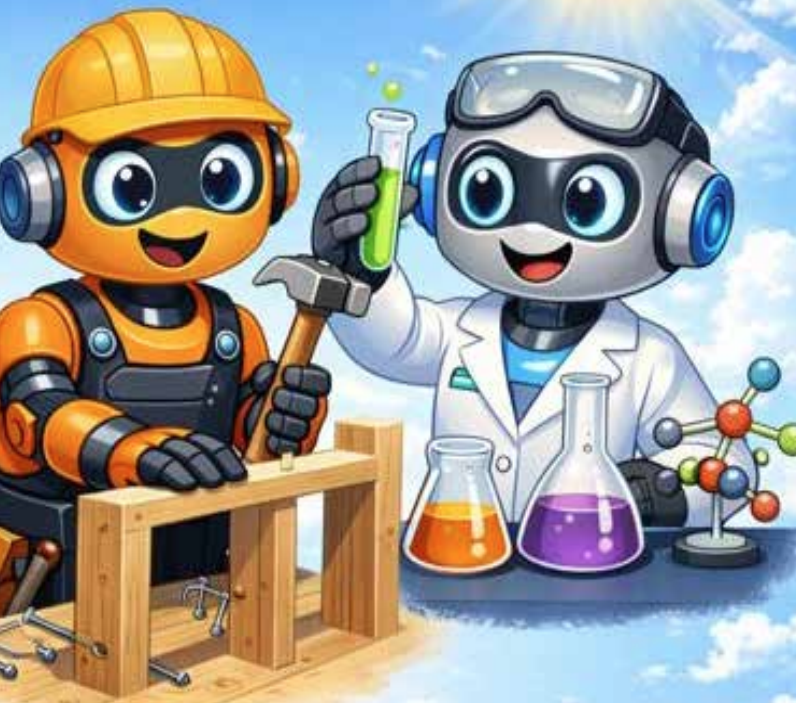
Artificial Intelligence is built on the five STEAM disciplines working together: Science asks “why” and finds patterns in data, Technology provides the digital code AI runs on, Engineering builds the systems where AI operates, Math turns numbers into predictions and optimized solutions, and Art brings the human creativity and purpose that make AI solutions truly meaningful. This lesson shows how AI puts these building blocks into action — turning words and images into “tokens” it can process, using those tokens to build smarter pattern-recognizing models like Large Language Models (LLMs), and ultimately creating tools meant to be guided by human ethics and critical thinking so AI can help solve real-world challenges responsibly.
-
1
 Introduction
This section explains how science helps us understand the world by asking questions and using evidence. It introduces atoms, energy, and information as the building blocks of nature and technology, and shows how DNA in living things is similar to data in computers. Students also learn simple explanations for days, seasons, and years. Overall, science is the foundation of STEAM because it explains the “why” behind everything.
-
2
 Lesson 1.1 Science Answers "Why"
This lesson introduces students to the wonders of science by exploring nature, Earth, space, atoms, DNA, energy, and technology. Students will discover how everything in the universe is made of atoms, how DNA carries the instructions for life, and how energy powers both living things and computers. Through age-appropriate explanations, the lesson encourages curiosity, critical thinking, and an appreciation for how science helps us understand the world around us.
-
3
Lesson 1.2 Atoms, Information & Energy
This lesson introduces students to essential science vocabulary that will help them better understand scientific concepts and investigations. Students will learn key terms such as atom, DNA, energy, hypothesis, observation, data, critical thinking, and the scientific method, while building the vocabulary needed to ask questions, analyze information, and communicate scientific ideas with confidence.
-
4
Lesson 1.3 DNA, Data & Living Things
This lesson helps students understand the difference between DNA and digital data by exploring how both store important information. Students will learn that DNA contains the instructions that build and sustain living things, while computers use data to store and process information. The lesson also introduces the connection between data and artificial intelligence, showing how AI learns from data while highlighting the important differences between machines and living organisms.
-
5
Lesson 1.4 Science Explains Days, Seasons & Years
This lesson explains why we experience day and night, the seasons, and years by exploring how Earth spins, tilts, and orbits the Sun. Students will discover how these simple movements create everyday patterns and learn how science helps us understand the natural world through observation and evidence.
-
6
Section 1 Wrap-Up
This lesson brings together the core concepts of science by showing how atoms, energy, information, and Earth's movements explain the world around us. Students will see how these ideas connect to technology and artificial intelligence while preparing for a hands-on investigation into why Earth has seasons.
-
7
 Easy AI Quiz
-
8
Introduction
-
9
Lesson 2.1 Technology Solves Problems with Tools
This lesson introduces technology as the many kinds of tools that help us solve problems and make life easier, safer, and smarter. Students will explore four categories of technology: hand tools like hammers and screwdrivers that help us build and fix things by hand; appliances like washing machines that save us time and energy; everyday inventions like airplanes and cars that help us travel, connect, and solve problems on a larger scale; and digital devices like computers, smartphones, and TVs that give us information and keep us connected anytime, anywhere. By the end of the lesson, students will understand that choosing the right tool for the right problem is what makes our lives better and helps build a brighter future.
-
10
Lesson 2.2 From Hand Tools to Digital Devices
This lesson explores how technology uses creativity and knowledge to improve our world, moving from simple hand tools to powerful digital devices. Students will see how tools and machines, from hammers to farm machinery like tractors, help people solve problems and work smarter, not harder. The lesson also shows how everyday technology like appliances and cars saves us time and effort, giving us more time for the things that matter. Finally, students will explore digital devices, including smartphones, laptops, tablets, and smartwatches, and how they open new worlds of communication, creativity, and learning. By the end of the lesson, students will understand that technology has shaped our past, shapes our present, and will shape our future, and that it's up to us to use it wisely and build a better world with it.
-
11
Lesson 2.3 Technology Changes Over Time
This lesson traces how technology for making food has changed over time, using bread-making as an example of progress. Students will start by learning how early people ground grain by hand using simple stone tools called querns, a method that took a lot of time and effort for limited results. They'll then see how people improved on this by inventing windmills and waterwheels, harnessing natural energy from wind and water to work faster and help more people with less effort. Finally, students will explore how today's electric machines mix, shape, and bake bread automatically, producing more food, better quality, and safer results for people around the world. Through this journey from rocks to smart machines, students will see how technology keeps evolving to solve problems and build a better future.
-
12
Section 2 Wrap-Up
This lesson explains how technology applies scientific ideas to solve problems, evolving from simple hand tools to advanced digital devices like AI. It highlights how innovations over time make tasks easier and more efficient for more people. The lesson also introduces “Real Intelligence,” emphasizing the human thinking and decision-making behind how technology is used. In the activity, students explore how grinding grain became easier over time by comparing manual and machine methods, helping them understand the impact of technological progress.
-
13
Section 2 — Technology · Quiz
-
14
Introduction
This section focuses on Real Intelligence, the human ability to think, make choices, and learn using both the mind and heart. It emphasizes that while technology and AI are powerful tools, humans are the ones who guide how they are used. Students explore the three key powers of real intelligence—thinking clearly, choosing wisely (with ethics and empathy), and learning from experience.
The section also compares human intelligence with artificial intelligence, showing that only humans can truly understand, feel, create, and make meaningful decisions. Finally, it explains how the brain learns through senses, neurons, and engrams, highlighting that practice and experience strengthen learning over time.
Overall, the key idea is that real intelligence is what makes humans thoughtful, creative, and responsible decision-makers in a world filled with technology.
-
15
Lesson 3.1 What Is Real (Human) Intelligence
This lesson explores what makes human intelligence "real" — different from artificial intelligence. Students will learn that real intelligence isn't just knowing facts; it's using your mind and heart to think, make choices, and learn. They'll see that thinking means asking questions, analyzing ideas, and using logic and imagination to solve problems; making choices means using values and judgment to decide what's right, even when it's not easy; and learning means staying curious, growing from mistakes, and improving over time. The lesson also compares human intelligence with AI, showing that while AI processes data and follows patterns, only humans can feel deep emotions, dream, build real relationships, and inspire meaningful change. By the end of the lesson, students will understand that combining their real intelligence — used wisely, kindly, and boldly — with technology is what will help them shape a better future.
-
16
Lesson 3.2 Inputs, Senses & Engrams
This lesson explores how our brains take in information and turn it into knowledge, memories, and action. Students will learn that our senses — sight, hearing, smell, taste, and touch — are the inputs that bring information about the world into our brains. That information becomes engrams, networks of connected brain cells that store our thoughts, memories, and skills; the stronger these connections grow through practice and repetition, the easier it is to remember and use what we've learned. Students will also see how our brains use this stored knowledge to make decisions, gain experiences, and keep learning and growing every day. The lesson closes with practical ways to keep the brain strong, like eating well, sleeping, staying curious, and connecting with others, along with the reminder that while AI tools can help solve problems, human creativity, ethics, and critical thinking remain essential.
-
17
Lesson 3.3 Real Intelligence vs. Artificial Intelligence
This lesson invites students into a discussion comparing what humans can do versus what AI can do. Students will explore how humans can think critically, question, judge, and consider meaning, while AI computes patterns and makes predictions from data. They'll also see the difference between human creativity and AI-generated content, noting that people build real ideas out of values and inspiration, while AI follows patterns and provides support based on its training. The lesson highlights that humans have real feelings, empathy, and compassion, whereas AI can imitate emotions but doesn't truly feel them. Through guided discussion questions, students will reflect on why critical thinking matters and what it means to "be human" in a world working alongside artificial intelligence.
-
18
Section 3 Wrap-Up
This wrap-up highlights that real intelligence is at the center of STEAM, giving humans the ability to think, make choices, and learn using both logic and emotion. It reinforces that, unlike AI, humans can feel, empathize, dream, and decide what is right. The lesson also reminds students how the brain learns through senses, neurons, and engrams, helping them grow over time.
It concludes by preparing students for the next topic—Engineering, where ideas are turned into real-world solutions—and includes an activity that challenges them to distinguish between tasks machines can do and those that require human intelligence.
-
19
Section 3 — Real Intelligence · Quiz
-
20
Introduction
This section introduces Engineering as the part of STEAM that turns ideas into real-world solutions. It explains that engineers use a cycle—imagine, design, build, test, and improve—to solve problems and create useful things. Students explore the large systems engineers build, such as electricity, clean water, roads, and communication networks, which support everyday life.
The lessons also show engineering in action through examples like airplanes, self-driving cars, and rockets, highlighting how these innovations improve the way we live and move. In addition, the section explains how AI supports engineers by helping with coding, design, automation, and system improvements, while humans remain in control of creativity and decision-making.
Overall, the key idea is that engineering transforms ideas into practical solutions that shape and improve the world, with human creativity leading and AI enhancing the process.
-
21
Lesson 4.1 Engineering Turns Ideas into Reality
This lesson introduces engineering as the field that turns ideas into real solutions that solve problems and build a better world. Students will explore four major systems engineers create: electricity, where power plants and distribution systems bring clean, reliable energy to homes, schools, and businesses; clean water systems, which collect, treat, and deliver safe drinking water to protect health and support communities; connected roads, where engineers design streets and bridges that improve safety, save time, and strengthen economies; and cell phone networks, which link towers and technology so people can stay connected anytime, anywhere. By the end of the lesson, students will understand that engineering combines imagination, design, and continuous improvement, and that ideas plus engineering equal real solutions for our future.
-
22
Lesson 4.2 Systems We Rely On
This lesson shows how engineers imagine, innovate, and build solutions that improve lives today and shape a better future. Students will learn that engineers design with science and math, using science to understand how things work, math to calculate and solve problems, and creativity to find the best solutions. They'll see how engineers turn ideas into tech objects like smartphones, laptops, drones, and electric cars by imagining, planning, building, and improving their designs. The lesson also highlights how engineers use art and design to make products beautiful, functional, and easy to use, since good design inspires people and improves everyday experiences. By the end of the lesson, students will understand that while science gives us knowledge, engineering uses that knowledge to create a better world by solving problems, improving lives, and inspiring change.
-
23
Lesson 4.3 Engineering in Action
This lesson brings engineering to life by showing how ideas become real inventions that solve problems and shape our future. Students will see how engineers turn imagination into reality by designing airplanes, cars, and rockets, and how they use science, technology, and creativity to turn plans into everyday products like digital devices. They'll also learn how engineers build and operate big systems, such as electricity grids, water treatment plants, and bridges, that power and connect entire communities. Digging deeper, students will explore the engineering behind airplanes, which balance aerodynamics, strong materials, and advanced systems for safe and efficient flight; self-driving and flying cars, which combine AI, sensors, and electric power to create smarter, safer transportation; and rockets and spaceships, which rely on powerful engines, heat shields, and lightweight materials to explore beyond our planet. Together, these examples show that engineering is more than building things — it's about solving problems, improving lives, and working as a team to build a better world.
-
24
Lesson 4.4 AI and Engineering
This lesson explores how artificial intelligence is increasingly helping human engineers work smarter, safer, and faster. Students will learn that AI supports engineers in four key ways: writing and improving software code by suggesting fixes, testing for errors, and optimizing performance; organizing and analyzing design data so engineers can find information and improve their designs more efficiently; guiding factory robots to build products accurately, safely, and with fewer defects; and monitoring complex systems like electrical grids, water systems, and traffic in real time to predict problems and save resources. Importantly, students will see that AI doesn't replace engineers — it empowers them, combining human creativity and imagination with AI's analytical power to solve problems together. By the end of the lesson, students will understand that AI plus engineering leads to smarter solutions, safer systems, and a more sustainable future for everyone.
-
25
Section 4 Wrap-Up
This wrap-up emphasizes that engineering brings ideas to life through a continuous cycle of imagining, designing, building, testing, and improving. It highlights how engineers create essential systems and innovative technologies—from everyday infrastructure to advanced machines like airplanes and rockets—while using AI as a helpful tool, not a replacement for human creativity.
It also introduces the next focus, Art, which adds creativity and human expression to innovation. The activity encourages students to apply the engineering process by designing and improving a delivery system, helping them experience how real-world problem-solving works.
-
26
Section 4 — Engineering · Quiz
-
27
Introduction
This section explores Art as the heart of STEAM, showing how creativity and expression bring meaning and emotion to everything we create. It explains that art is more than just paintings—it includes many forms like drawing, sculpture, writing, music, photography, and video, all of which allow people to share ideas, feelings, and unique perspectives.
Students also learn how digital tools and AI are changing the way art is created and experienced, opening new possibilities while raising important questions about originality and meaning. Despite these advancements, the section emphasizes that true creativity, emotion, and original ideas come from humans.
Overall, the key idea is that art is a powerful form of human expression, and even with advanced tools like AI, human creativity and originality remain essential.
-
28
Lesson 5.1 Art Expresses Our Creativity
This lesson introduces art as a powerful way people express their unique creativity, emotions, and identity. Students will learn that art lets us imagine, explore ideas, and express ourselves in colorful and creative ways, and that throughout history, art has told stories, shared emotions, and connected people across time and cultures. They'll see how creating original art, whether drawing, illustration, dance, or digital content, lets people show their personalities and share their unique styles and voices with the world. The lesson also introduces how AI is changing the way people create and experience art, opening up new tools and possibilities while raising important questions about creativity and meaning. By the end of the lesson, students will understand that art is more than what we see, it's how we feel, think, and connect, and that the world needs their unique creative voice.
-
29
Lesson 5.2 Art Actions
-
30
Lesson 5.3 Art is All Around Us! (paint, sculpture, digital, music, video, stories)
-
31
Section 5 — Art · Quiz
-
32
Introduction
This section explores Math as the foundation that connects all areas of STEAM. It explains how math helps us understand the world, solve problems, discover patterns, and create new technologies. Students learn how math supports everyday activities like managing money, as well as advanced fields like engineering, science, video games, and artificial intelligence.
The lessons introduce key mathematical concepts such as functions, formulas, algebra, geometry, calculus, and probability, showing how they are used in real-life situations. Students also discover that math is the language behind AI, helping computers process information, recognize patterns, and make predictions.
Overall, the key idea is that math is the logic and problem-solving tool that powers innovation, explains the universe, and connects every part of STEAM together.
-
33
Lesson 6.1 Math Explains Science & Enables Designs
This lesson shows students that math is everywhere, helping explain the world around us and enabling us to build the future. Students will learn how math functions help us make, save, and spend money wisely through budgeting, saving, and investing, and how mathematical formulas explain natural phenomena like gravity, velocity, and energy, helping scientists understand and predict how the universe works. They'll also see how math enables engineers to design and build everyday objects, from bridges to phones, using geometry, trigonometry, and calculus to create safe and reliable products. Finally, students will discover that math powers video games and AI, driving the graphics, logic, and machine learning behind the apps and games they use every day. By the end of the lesson, students will understand that math is the language of the universe and the toolbox for innovation, and that learning and using it can help them build a better future.
-
34
Lesson 6.2 Functions & Formulas
This lesson dives into math functions and formulas, showing students that math is more than numbers, it helps us solve problems, understand the world, and create the future. Students will review the four basic math functions, adding, subtracting, multiplying, and dividing, and see how these building blocks are used everywhere, from budgeting and shopping to cooking, sports, and coding. The lesson then explores real scientific formulas, including Einstein's equation for energy, Newton's second law of force, and the formula for kinetic energy, showing how math explains the laws of nature and is used in fields like space exploration, engineering, transportation, and medicine. By the end of the lesson, students will understand that mastering math functions and formulas gives them the power to solve problems, create solutions, and make a real difference in the world.
-
35
Lesson 6.3 We Use Math Daily
This lesson shows students how they use math every day to solve problems, make choices, and get things done. Students will see how math helps us move money, whether earning, saving, spending, or investing across different currencies, and how adding and subtracting prices helps us shop smart, calculate totals, and stay on budget. The lesson also demonstrates how dividing helps us share things fairly, like splitting a dessert equally, while multiplying helps us calculate how our money grows, such as figuring out earnings based on an hourly wage. By the end of the lesson, students will understand that math is everywhere in daily life, and that using it well today can help set them up for success tomorrow.
-
36
Lesson 6.4 Algebra, Geometry & Calculus
This lesson explores three powerful branches of math that power ideas and drive the future: algebra, geometry, and calculus. Students will learn how algebra helps us solve for unknown variables and is used to build apps, create technology, and write computer code. They'll see how geometry defines two-dimensional and three-dimensional shapes, shaping everything from basic figures to the video game worlds and characters people interact with. The lesson also introduces calculus as the math of change, showing how it explains motion and rate of change, and how it's used in real space exploration to calculate rocket launches, guide precise landings, and ensure safe returns to Earth. By the end of the lesson, students will understand that math trains our brains in the logic of problem solving and decision making, following a process of thinking, analyzing, planning, solving, and deciding to achieve real results.
-
37
Section 6 Wrap-Up
This lesson explains how math connects all areas of STEAM and plays a key role in everyday life and advanced technology. It shows how math helps manage money, explain natural laws, support engineering designs, and power video games and AI. Students review functions, formulas, budgeting, and the roles of algebra, geometry, and calculus in the real world, while also understanding that math is the language behind AI and logical thinking. The lesson prepares students for the STEAM Capstone, where they will combine all five areas to solve a real-world problem. In the activity, students plan a shopping trip within a set budget, using basic math skills and a savings goal to practice real-life decision-making.
-
38
Section 6 — Art · Math
-
45
Lesson 0.1 Orientation & Welcome
-
46
Lesson 0.2 Learning Objectives & How This Course Works
-
47
Lesson 0.3 Watch & Warm-Up
-
48
Lesson 1.0 INTRO /AI Vocabulary
-
49
Lesson 1.1 How Do AIs Work? + Large Language Models (LLMs)
-
50
Lesson 1.2 Cookie Info Flow
-
51
Lesson 1.3 PRACTICE PROMPTS
-
52
 How Ais Work-Teen Guide
 -
53
How AIs Work
-
54
Quiz How Do AIs Work?
-
55
Activity: Importance of Cyber-Security
-
56
AI for all
-
81
3.8.1 AI Sensors — Inputs & Actions: Main Points / Vocabulary
-
82
3.8.2 Intellect Inside AIs: AI Sensors & Cyber Worlds
-
83
3.8.3 Real-World AIs: AI Sensors and Our Real-World
-
84
3.8.4 More — AI Sensors: Input Hardware, Video Gaming, and Machine Learning
-
85
3.8.5 Let's Think Together: Explore AI (Group Discussion)
-
119
Lesson 5-0: Game Worlds, AIs and Us — Overview
This lesson introduces how science, sensors, and AI work together to create interactive video game worlds. Students explore human senses, game technology, cyber science, and AI while learning how these elements shape gameplay and everyday digital experiences.
-
120
Science of Game Worlds
-
121
The 7 Ps of Play
-
122
How AI Balances Game Difficulty
-
123
GAME WORLDS, AI, AND THE SCIENCE OF PLAY
-
124
5.1.0 INTRO_Vocab
This lesson introduces Cyber Science by comparing the real world with digital game worlds and exploring how AI makes games more interactive and personalized. Students learn key concepts like sensors, hardware, software, energy, and AI while comparing human senses with AI systems.
-
125
5.1.1 Our REAL and CYBER Worlds
This lesson explores how real-world science powers AI and video games through matter, energy, sensors, electronics, and human senses. Students learn how AI processes information, creates digital experiences, performs real-world tasks, and should be used safely, fairly, and responsibly.
-
126
5.1.2 CYBER WORLD Science
This lesson explores how computer science powers AI through data, code, algorithms, and machine learning. Students learn how AI shapes video games, personalizes experiences, processes information, and generates content while practicing effective prompting, online safety, and responsible AI use.
-
127
5.1.3 Video Games PLAY SCIENCE
This lesson explores the science behind video games, from controller sensors and computer hardware to physics, graphics, and AI. Students learn how 3-D game worlds are created, how games engage the human senses and emotions, and why balancing gaming with real-world activities is important.
-
128
5.1.4 SUM-UP
This lesson brings together the key ideas of Cyber Science, showing how humans, computers, sensors, energy, and AI work together to create video game experiences. Students compare human and AI decision-making while exploring how hardware, software, and data power interactive game worlds.
-
129
CYBER SCIENCE: GAME WORLDS, AI, AND US
-
131
5.3.0 INTRO
This lesson introduces how science, AI, sensors, and human senses work together to create interactive video game worlds. Students explore how technology shapes gameplay and learn to think critically about the role of AI in games and everyday digital experiences.
-
132
5.3.1 Seven Ps Overview
This lesson explores the 7 Ps of video game worlds: Produce, Process, Pixels, Pick, Play, Points, and People. Students learn how science, technology, math, and human behavior work together to create interactive and engaging gaming experiences.
-
133
5.3.2 Seven Ps Details
This lesson explores the science behind the 7 Ps of video games: Produce, Process, Pixels, Picks, Play, Points, and People. Students learn how hardware, software, math, physics, creativity, and human senses work together to create dynamic and immersive game experiences.
-
134
5.3.3 Integrated GAMEO
-
135
5.3.4 SUM-UP
-
136
5_3_GAME WORLDS - QUIZ
-
137
5.4.0 INTRO
-
138
5.4.0 How AIs Actually Think Inside Video Games
-
139
5.4.1 AIs INSIDE
This lesson explores how AI powers both game creation and gameplay by helping designers, controlling NPCs, adapting difficulty, and personalizing player experiences. Students learn how AI senses, reasons, acts, and learns while understanding its limitations and the importance of human oversight.
-
140
5.4.1 AIs Inside Video Games
-
141
5.4.2 AIs help MAKE GAMEOS
This lesson explores how humans and AI work together to create video games, from imagining and designing worlds to programming, testing, launching, and improving them. Students learn the roles of people and AI throughout game development and how player feedback helps shape future updates.
-
142
5.4.2 How AI Actually Powers Your Favorite Video Games
-
143
5.4.3 AIS in VIDEO GAMES
This lesson explains the 5-step AI cycle in video games: input, processing, decision, action, and repetition. Students learn how AI controls NPCs, adapts difficulty, personalizes gameplay, and creates realistic game worlds across different types of games.
-
144
5.4.3 AIs In Video Games
-
145
5.4.4 SUM UP
This lesson wraps up the “AIs Inside” unit by showing how AI helps create, personalize, and improve video games. Students explore AI’s role in game design and gameplay while learning about its benefits, risks, and the importance of using AI safely, responsibly, and critically.
-
146
5.4.4 AI_in_Video_Games
-
147
5.4 AIs Inside - Quiz
-
149
6.1.0 INTRO
This lesson introduces the “Flow, Glow, Stow” journey of data through computers to power AI. Students learn how electrical signals, CPUs, GPUs, memory, and storage work together while exploring key computer science terms and their connection to real-world science.
-
150
6.1.1 KNOW, FLOW, GLOW
This lesson explains how computers process data using electrical signals, CPUs, and GPUs. Students learn how digital information becomes 1s and 0s, how microchips process data, and how pixels use light to create images on screens.
-
151
6.1.2 STOW, IPO & PARTS
This lesson completes the “Flow, Glow, Stow” story by exploring how computers process, organize, and store digital data. Students learn about bits and bytes, storage technologies like hard drives and SSDs, and the IPO framework—Input, Process, and Output—while following data from devices like keyboards and mice through processing, display, printing, and long-term storage.
-
152
6.1.3 GLOBE & GROW
This lesson explores how computers evolved from isolated machines into a globally connected network through floppy disks, LANs, the Internet, and cloud computing. Students learn how data travels through fiber optics, electrical signals, radio waves, and storage systems while discovering how connected technology has transformed communication, learning, and collaboration.
-
153
6.1.4 SUM UP
This lesson wraps up the unit by showing how hardware, software, energy, and information work together to power computers and AI. Students explore five types of digital signals—e-Bits, M-Bits, L-Bits, R-Bits, and K-Bits—and learn how electricity, magnetism, light, and radio waves help computers move, process, store, and protect information.
-
154
SECTION 6.1 - COMPUTERS — Flow, Glow & Stow Data - QUIZ
-
155
6.2.0 INTRO - Vocab
This lesson introduces networks by showing how data travels from your device to AI servers and back through the Internet. Students learn key network terms and explore how communication evolved from postal mail and telegraphs to telephones, fiber optics, the Internet, and WiFi, while discovering how human trade and travel networks connected the world long before computers.
-
156
6.2.1 WRITE / WHEELS
This lesson explores the first two stages of network evolution: Write and Wheels on Rails. Students learn how postal systems, stamps, and fast mail routes connected people across distances, then discover how steam trains and expanding railway networks transformed travel and connected continents.
-
157
6.2.2 WIRES / WIRELESS (Radio) / WAVES
-
158
6.2.3 WORLDWIDE / WiFi
This lesson explores how computer networks evolved into the worldwide Internet and how billions of devices connect and share information. Students learn how WiFi sends data packets through radio waves and routers, discover the Internet of Things, and compare the Internet with the brain and computer chips as connected systems.
-
159
6.2.4 SUMMARY
This closing lesson brings together the Networks unit by comparing how people and technology have connected across time, from postal mail and railways to telegraphs, telephones, WiFi, and AI-powered networks. Students reflect on how global connections have transformed communication and information sharing while exploring ideas like purpose, community, and using technology for good.
-
160
SECTION 6.2 - QUIZ
-
161
6.3.0 INTRO / Inside the Box
This lesson introduces the “Inside the Box” unit by exploring the hardware and software that make AI computers work. Students learn how components like the CPU, GPU, RAM, SSD, and power supply work with AI models, algorithms, data, and operating systems to process questions and deliver answers.
-
162
6.3.1 Watch Other Related Videos
This lesson brings together a collection of short videos that recap key ideas from the “Inside the Box” unit, including how computers work, networks, the 5 Bits, 7 Opposites, apps, and the history of computing. Students also explore bonus science topics on trains, railways, farming, factories, and the technologies that shaped the modern world.
-
163
6.4.0 INTRO / Vocab
This lesson introduces the “AI Engines” unit by showing how AI tools work behind the scenes to help people learn, create, solve problems, and stay organized. Students learn key AI vocabulary and discover how prompts, networks, hardware, software, GPUs, and AI models work together while emphasizing responsible human decision-making
-
164
6.4.1 COMPUTERS Enable AIs
This lesson explores how computers make AI possible by combining hardware, software, electricity, data, and information. Students learn the five-step computer process—input, processing, output, storage, and AI-enabled—and discover how humans, networks, and AI models work together to solve problems, evaluate results, and improve over time.
-
165
6.4.2 HOW AIs WORK
This lesson traces the complete journey of how a human prompt becomes an AI-generated answer, from networks and data centers to CPUs, GPUs, memory, storage, and Large Language Models. Students learn how AI processes data, generates and improves responses, the energy and cooling demands behind AI computing, and why humans must use critical thinking and judgment when working with AI.
-
166
6.4.4 SUMMARY
This lesson introduces the “AI Engines — Change Drivers” unit by exploring how artificial intelligence works as a modern engine powering video games, research, education, and everyday technology. Students learn how CPUs, GPUs, data centers, algorithms, and AI models work together while exploring the evolution of technology, human-AI collaboration, and the importance of ethical and responsible AI use.
-
167
SECTION 6.4 - AI Engines - QUIZ
-
168
6.5.0 AIs AROUND US
This lesson brings together the key ideas of the unit by showing how computers, networks, and AI engines work together to power the technology we use every day. Students explore how AI helps us learn, make predictions, automate tasks, improve services, and create new ideas while understanding the real-world impact of invisible AI technology.
-
169
6.5.1 ELM ENABLERS
This lesson explores the ELM Enablers—Electricity, Light, and Magnetism—that make computers and AI possible. Students learn how electricity powers chips and WiFi, light creates images on screens, and magnetism and electric charges store digital data in hard drives and SSDs.
-
170
6.5.2 BENEFITS
This closing lesson summarizes the key skills and knowledge students gained throughout the course, from understanding computer hardware, software, networks, and AI engines to applying AI for content creation. Students review how AI works, recognize its impact on daily life, and learn why responsible, ethical, and informed AI use matters.
-
171
SECTION 6.5 - Summary - QUIZ
-
173
7.1.0 INTRO
This lesson explores the science and AI behind everyday smartphones, showing how hardware, software, sensors, and networks work together to power smart features and apps. Students learn how voice, electricity, radio waves, and light transform information while discovering the benefits, privacy concerns, and safety considerations of using AI responsibly.
-
174
7.1.1 Sound and Electricity
This lesson explores how sound, electricity, and magnetism work together to carry a telephone call. Students learn how microphones and speakers convert sound into electrical signals, how transistors and microchips strengthen and process signals, and how cell phones use digital pulses and batteries before introducing alternating current (AC) electricity.
-
175
7.1.1 Sound and Electricity - QUIZ
-
176
7.1.2 Radio and Light
This lesson explores how smartphones turn voice into radio signals that travel across global networks using electricity, antennas, cell towers, and electromagnetic waves. Students also learn how smartphone hardware—including the CPU, RAM, and storage—and software like the operating system and apps work together to process information and power everyday communication.
-
177
7.1.1 Radio and Light - QUIZ
-
178
7.1.3 AIs & SMARTPHONES
This lesson explores the four types of waves smartphones use—sound, electricity, light, and WiFi—and how they power everyday features like calls, messaging, photos, videos, and apps. Students discover how AI makes smartphones smarter through voice assistants, translation, image recognition, personalized recommendations, and other AI-powered tools while learning to use these technologies safely and responsibly.
-
179
7.1.4 ADVANCED WAVES - QUIZ
-
180
7.1.4 ADVANCED WAVES
This lesson completes the “7 Waves” journey by exploring how smartphones, the Internet, and AI transform raw data into useful information and knowledge. Students learn how search engines, chatbots, and digital assistants help access the world’s knowledge while reflecting on the importance of equal access to learning, responsible technology use, and sharing knowledge as wisdom.
-
181
7.1.4 ADVANCED WAVES - QUIZ
-
182
7.1.5 SUM UP
This lesson concludes the smartphone unit by reviewing how sound, electricity, radio, and light waves work together to power modern smartphones and how apps and AI combine many everyday tools into one smart device. Students reflect on how smartphones and AI connect people to information and knowledge while exploring how future technologies could make communication, learning, and daily life even more connected.
-
183
7.1 Smartphone WAVES - QUIZ
-
184
7.2.0 INTRO / Vocab
This lesson introduces how smartphones replaced many separate physical objects with apps, combining tools like cameras, maps, phones, calendars, calculators, and music players into one device. Students learn key vocabulary and compare older technologies with their modern smartphone equivalents to understand how apps, software updates, and AI have changed everyday life.
-
185
7.2.1 CAMERAS and MAPS
This lesson explores how cameras, maps, clocks, calendars, and calculators evolved from separate physical tools into smartphone apps. Students learn how film became digital photography, how GPS enables modern map apps, and how smartphone sensors and software provide everyday tools for time, weather, and mathematics.
-
186
7.2.2 MUSIC and MOVIES
This lesson traces how music, movies, and video games evolved from separate physical machines into apps on smartphones. Students explore the technology behind records, CDs, film projectors, VHS, DVDs, arcade machines, and game consoles while learning how digital apps have made entertainment more accessible and portable, along with the importance of using them responsibly.
-
187
7.2.3 MAIL and MORE
This lesson explores how mail, research, and telephone calls evolved from separate physical systems into smartphone apps and services. Students compare handwritten letters, libraries, land-line phones, and modern digital tools while learning how smartphones provide instant communication and access to information, along with the importance of staying focused and using technology thoughtfully.
-
188
7.2.4 SUM UP
This closing lesson brings together the key ideas from “Objects Before Apps,” showing how smartphones combine many once-separate tools into apps, sensors, and digital features. Students review the evolution of phones, cameras, maps, music, movies, mail, and research while learning how pixels and cellular networks make smartphones possible and how these devices create new opportunities for creativity, communication, and learning.
-
189
7.2 - OBJECTS Before APPS - QUIZ
-
190
7.3.0 INTRO / Learning Objectives
This lesson introduces how AI is built into everyday smartphone apps such as the camera, maps, voice assistant, mail, music, video, calendar, calculator, and search. Students discover how AI makes these apps smarter and more personalized through automation, recommendations, translation, problem-solving, and other tools that support learning, creativity, communication, and everyday life.
-
191
7.3.1 AIs INSIDE Smartphones
This lesson explores how STEAM waves power AI inside smartphones, from sound and electricity to radio and light waves. Students learn how these waves work together with smartphone hardware, apps, and AI to support communication, translation, image recognition, recommendations, creativity, and everyday problem-solving.
-
192
7.3.2 AIs INSIDE Apps
This lesson explores how AI works behind the scenes in seven common types of smartphone apps, including Search, Stream, Share, Shop, Chat, Safety, and Content apps. Students learn how AI helps personalize experiences, find information, create content, make recommendations, improve security, and support e
-
193
7.3.4 SUM
This closing lesson reviews how AI works behind the scenes in everyday smartphone apps like cameras, maps, music, video, messaging, search, and phone calls. Students learn how AI improves experiences, communication, safety, and personalization while reflecting on the importance of using technology wisely, kindly, and responsibly.
-
194
7.3 - AIs in APPS - QUIZ
-
195
7.4.0 Learning Objectives
This final lesson brings together the course by showing how STEAM, AI, and people work together to power today’s technology and create new opportunities. Students explore how each STEAM area supports AI, how AI improves learning, communication, creativity, and problem-solving, and how skills like critical thinking, coding, teamwork, responsibility, and innovation can help prepare them for the future.
-
196
7.4.1 Benefits
This lesson explores the key benefits of understanding how smartphones, apps, and AI work together. Students learn how to explain and apply AI-powered tools, understand how apps are created, and recognize both the benefits and risks of AI, including privacy, data tracking, bias, misinformation, and security.
-
197
7.4.2 Smartphone Apps, AI & Us
This lesson explores how people, apps, and AI work together as a team to make everyday tasks easier and smarter. Students learn how AI supports common apps like cameras, maps, music, messaging, search, and voice assistants while understanding that humans remain in control of the final decisions.
-
198
7.4.3 Notice Apps - Then and Now
This lesson explores how smartphone apps support everyday life by helping people learn, connect, create, explore, and solve problems. Students discover how AI is making apps smarter and imagine future possibilities such as personal AI tutors, instant translation, creative tools, smart assistants, augmented reality, and technology that can help improve health, transportation, and the environment.
-
199
7.4.4 Be Aware of Ads in Apps
This closing lesson focuses on using AI safely and responsibly across everyday apps, balancing its benefits with important privacy and cybersecurity responsibilities. Students learn to protect personal information, use strong security practices, recognize misinformation and deepfakes, verify important information, and think critically when using AI.
-
201
8.1.0 INTRO / Vocab
This lesson explores how early mechanical inventions, automata, and control systems helped pave the way for modern AI. Students trace the evolution from gears and levers to automatic and AI-assisted systems while comparing life, work, and technology around 1900 with today and learning how history, creativity, and problem-solving continue to shape AI.
-
202
8.1.1 AUTOMATA Machine Controls
This lesson explores the history of automata and robots, showing how mechanical machines evolved from simple tools and entertainment devices into modern AI-powered systems. Students discover how gears, motors, memories, and AI transformed machines from early automata to factory robots, drones, and human-machine collaboration while connecting these inventions to the future of AI.
-
203
8.1.1 AUTOMATA Machine Controls - QUIZ
-
204
8.1.2 PAST STUDY
This lesson explores how studying the past, especially early automata and machine controls, helps us better understand and prompt today’s AI. Students compare past and present learning tools, examine AI-generated content, and practice writing effective prompts using context, questions, answer format, and relevant details.
-
205
8.1.2 PAST STUDY - QUIZ
-
206
8.1.3 PAST WORK
This lesson traces the evolution of work and technology from physical labor and simple tools to machines, computers, big data, and artificial intelligence. Students explore how each technological era increased productivity and gradually shifted machines from performing physical tasks to supporting learning, problem-solving, and human-like intelligence.
-
207
8.1.3 PAST WORK - QUIZ
-
208
8.1.4 HOME LIFE. Muscle Play
-
209
8.1.4 HOME LIFE - Muscle Play - QUIZ
-
210
8.1.5 SUM UP
This closing lesson compares life in the early 1900s with life today, exploring changes in home life, play, school, work, and technology. Students reflect on how creativity, teamwork, and problem-solving drove innovation from simple tools and automata to modern smart devices and AI, while considering how they can help shape the future.
-
211
8.1.5 SUM UP - QUIZ